| EMUD Tweeter Repair, part 4 |
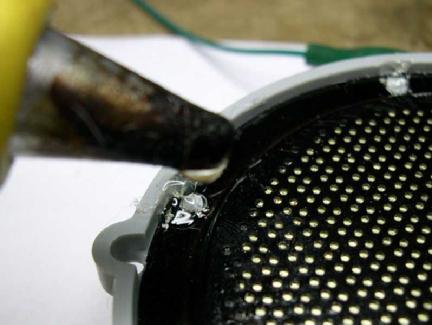 |
| Hot glue secured the grill in place |
|
| All that was left to do was to secure the metal grill to the tweeter's plastic body. Rather than re-melt those short pins we had to break off while opening, little dabs of hot glue hold well and should be easy to remove for any future repair.
|
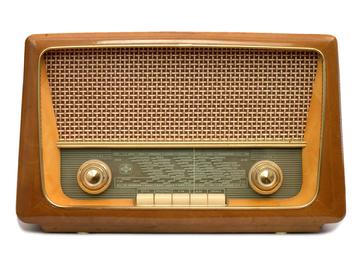 |
| EMUD Rekord Junior 196 AM/FM table radio |
|
Being an audio engineer, I was very curious about the performance of this tweeter. Although I did not measure the tweeter by itself, I did take a measurement of the radio's two speaker combo audio frequency response with and without the tweeter. The repaired tweeter is a wonderful compliment to the main oval speaker. I fed pink noise into the radio’s phono input. Without the tweeter, the radio’s sound output is relatively linear from 300hz up to around 7khz, above which output drops like a stone. With the tweeter connected, the response is extended quite nicely up to around 13khz. The tweeter adds very little energy below 7khz but seems to become efficient at almost exactly the frequencies where the main speaker drops away. The amount of tweeter output is nearly ideal, neither too strong nor too soft, matching the main speaker’s level well. I do not know if the tweeter’s output would be stronger if I had cut holes into the new foam, but since it seems nearly ideal I am happy with it as it is.
-c2010
Richard Fairbanks
all rights reserved
|
|
|